Comparing Laravel and .NET

July 19, 2024 · 9 min read

Laravel vs .NET
Laravel and .NET have become the leading frameworks in web development. Both have caught the interest of developers around the world, each with its own special features and abilities. Let’s explore these frameworks in detail and give you a thorough comparison to help you choose wisely.
What is Laravel?
Laravel is a popular open-source PHP framework known for its elegant syntax, developer-friendly features, and robust ecosystem. Developed by Taylor Otwell, Laravel has become famous for its ability to simplify the web development process. Laravel has a clear syntax and a powerful toolkit that empowers developers to build modern, dynamic, and scalable web applications.
Learn Laravel 12
We’ve created a very simple guide for anyone interested in joining the Laravel community. This series covers all the important features of Laravel and is a great resource for beginners. Begin learning Laravel with our series Laravel 12 for Beginners: A Step-by-Step Guide to Learn the Concepts.
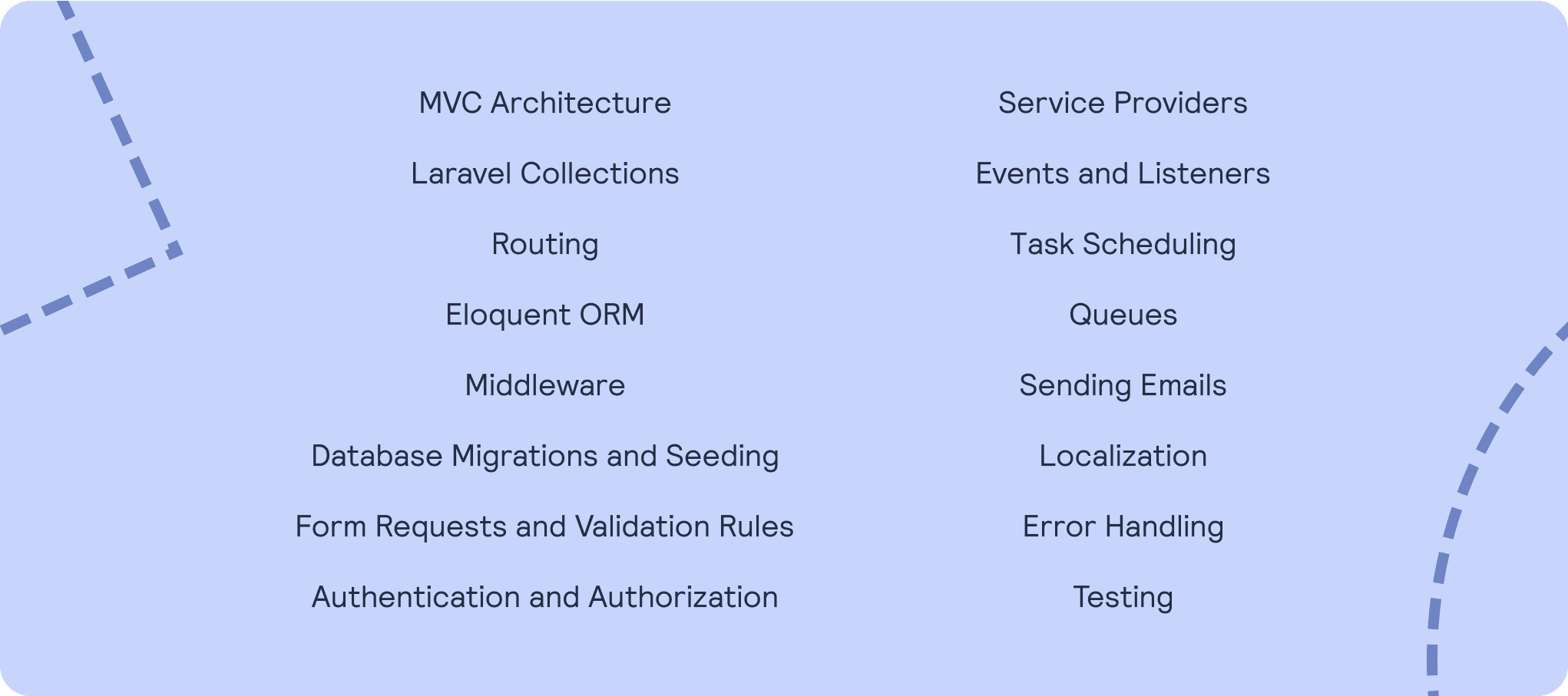
Key features of Laravel
Model-View-Controller (MVC) Architecture: Laravel uses the MVC architectural pattern, which promotes separation of concerns and enhances code maintainability.
Eloquent ORM: Laravel’s Eloquent ORM (Object-Relational Mapping) simplifies database interactions, allowing developers to work with databases using an intuitive, object-oriented syntax.
Blade Templating Engine: Laravel’s Blade templating engine provides a clean and concise way to create dynamic HTML templates, making it easier to manage and render views.
Artisan Command-Line Interface The Artisan CLI is a powerful tool that simplifies common development tasks, such as generating boilerplate code, running migrations, and managing queues.
Robust Ecosystem: Laravel’s ecosystem offers a huge collection of pre-built packages and libraries, allowing developers to quickly add different features to their applications.
What is .NET?
.NET, developed by Microsoft, is a complete software framework that supports multiple programming languages, including C#, F#, and VB.NET. It provides a robust set of tools, libraries, and APIs for building a wide range of applications, from web applications to mobile apps and enterprise-level software.
Key features of .NET
Multi-Language Support: .NET allows developers to choose from various programming languages, including C#, F#, and VB.NET, depending on their preferences and the project’s requirements.
Extensive Library and Tools: .NET offers a huge collection of pre-built libraries, tools, and frameworks, such as ASP.NET, Windows Forms, and Windows Presentation Foundation (WPF), which accelerate development and enhance productivity.
Integrated Development Environment (IDE): Visual Studio, Microsoft’s flagship IDE, provides a powerful and user-friendly environment for .NET development, offering features like code editing, debugging, and project management.
Enterprise-Grade Security: .NET prioritizes security, with built-in features like code access security, role-based security, and cryptography, making it a popular choice for enterprise-level applications.
Cross-Platform Compatibility: With the introduction of .NET Core, the framework has become more cross-platform, allowing developers to build applications that can run on Windows, macOS, and Linux.
Differences between Laravel and .NET
Now that we’ve looked at the basics of both frameworks, let’s get into a detailed comparison to help you figure out which one is the best fit for your web development needs. These are the topics that we will focus on while comparing Laravel and .NET:
Architecture and Design Patterns
Programming Languages and Ecosystem
Performance and Scalability
Development Productivity and Tooling
Security and Reliability
Community and Ecosystem
Deployment and Hosting
Learning Curve and Adoption
1. Architecture and design patterns
Laravel architecture
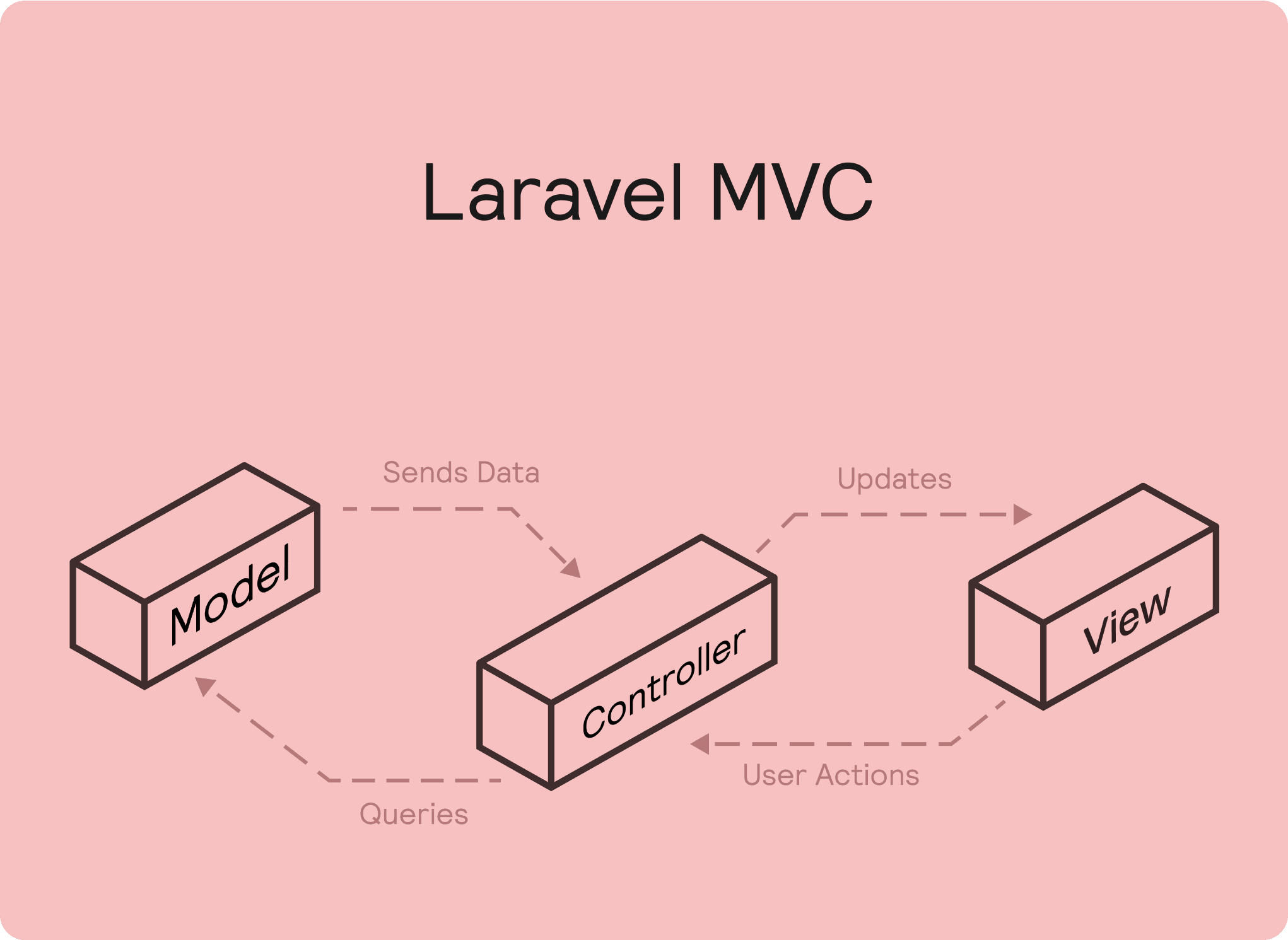
Laravel follows the Model-View-Controller (MVC) architectural pattern, which is a widely recognized approach for structuring web applications. This pattern promotes the separation of concerns, making it easier to manage complex applications.
Models: Responsible for data access and manipulation, representing entities like users, products, or orders.
Views: Responsible for rendering HTML templates using Blade, Laravel’s powerful templating engine.
Controllers: Act as the intermediary between models and views, handling user requests, processing data, and directing the application to the appropriate view.
ASP.NET architecture
Similar to Laravel, ASP.NET Core also uses the MVC architectural pattern, ensuring a clear separation of responsibilities. Additionally, ASP.NET Core introduces the Razor Pages approach, which combines models, views, and controllers into a single Razor Page template, simplifying development and reducing code duplication.
2. Programming languages and ecosystem
Laravel
Laravel is a PHP framework! PHP has a vast and active community, with a rich ecosystem of libraries, tools, and resources available for developers.
ASP.NET
ASP.NET, on the other hand, is a part of the .NET framework, which supports multiple programming languages, including C#, F#, and VB.NET. The .NET ecosystem is extensive, with a wide range of libraries, tools, and frameworks developed and maintained by Microsoft and the broader .NET community.

3. Performance and scalability
Laravel performance
Laravel is known for its impressive performance, thanks to its efficient caching mechanisms and the underlying PHP runtime. Laravel’s Eloquent ORM also contributes to its performance by optimizing database interactions and minimizing the need for complex SQL queries.
ASP.NET performance
ASP.NET Core, on the other hand, is renowned for its exceptional performance, particularly in terms of server-side processing and handling high-traffic applications. The .NET runtime, combined with the efficient ASP.NET Core framework, ensures that ASP.NET Core applications can handle large volumes of requests with minimal latency.
Scalability
Both Laravel and ASP.NET Core are highly scalable frameworks, offering various strategies for scaling applications. Laravel’s horizontal scaling approach, which involves adding more servers to handle increased traffic, aligns well with modern cloud-based infrastructure. ASP.NET Core’s vertical scaling, which focuses on optimizing server resources, can also be effective for certain use cases.
4. Development productivity and tooling
Laravel development productivity
Laravel is renowned for its developer-friendly features and elegant syntax, which contribute to increased productivity. The framework’s Artisan CLI, Blade templating engine, and extensive ecosystem of pre-built packages streamline the development process, allowing developers to focus on building the core functionality of their applications.
ASP.NET development productivity
ASP.NET Core also offers a range of tools and features that enhance developer productivity. Visual Studio, Microsoft’s flagship IDE, provides a comprehensive and user-friendly environment for .NET development, offering features like code editing, debugging, and project management. Additionally, the .NET ecosystem offers a vast collection of libraries, frameworks, and tools that can accelerate development.

5. Security and reliability
Laravel security
Laravel takes security seriously, with built-in features like password hashing, CSRF protection, and input validation. The framework also provides a secure way to handle authentication and authorization, making it easier for developers to implement robust security measures.
ASP.NET security
ASP.NET Core is also known for its strong focus on security, with features like code access security, role-based security, and cryptography. The framework’s integration with Azure services and Microsoft’s enterprise-grade security expertise make it a popular choice for building secure, mission-critical applications.
Reliability
Both Laravel and ASP.NET Core have proven to be reliable frameworks, with active communities, regular updates, and a commitment to addressing security vulnerabilities and bug fixes. The reliability of these frameworks is further enhanced by their extensive documentation, community support, and the availability of third-party packages and libraries.
6. Community and ecosystem
Laravel community
Laravel boasts a vibrant and active community of developers, contributing to its rapid growth and adoption. The framework’s official documentation, online tutorials, and community-driven resources make it easy for developers to learn and contribute to the ecosystem. We have also shared many helpful Laravel blog posts that you might find interesting.
ASP.NET community
The .NET community, including ASP.NET Core, is also thriving, with a strong presence of developers, Microsoft-certified experts, and community-driven initiatives. The .NET ecosystem benefits from Microsoft’s extensive resources, support, and integration with other Microsoft products and services.
Ecosystem
Both Laravel and ASP.NET Core have robust ecosystems, offering a wide range of third-party packages, libraries, and tools to extend the functionality of their respective frameworks. The availability of pre-built solutions can significantly accelerate development and reduce the need for custom implementation.

7. Deployment and hosting
Laravel deployment
Laravel applications can be deployed on a variety of hosting platforms, including shared hosting, virtual private servers (VPS), and cloud-based infrastructure like AWS, Google Cloud, or DigitalOcean. The framework’s flexibility allows for easy integration with popular deployment tools and CI/CD pipelines.
ASP.NET deployment
ASP.NET Core applications can be deployed on Windows, macOS, and Linux environments, thanks to the framework’s cross-platform capabilities. ASP.NET Core’s tight integration with Microsoft’s Azure cloud platform makes it a natural choice for organizations already invested in the Microsoft ecosystem, providing seamless deployment and hosting options.
8. Learning curve and adoption
Laravel learning curve
Laravel is known for its steep learning curve, particularly for developers who are new to the PHP ecosystem. However, the framework’s comprehensive documentation, active community, and abundance of online resources make it relatively easy to get started and become proficient over time.
ASP.NET learning curve
ASP.NET Core, on the other hand, may have a more gradual learning curve, especially for developers already familiar with the .NET ecosystem and C#. The integration with Visual Studio and the availability of Microsoft’s extensive documentation and training resources can make the onboarding process smoother for developers with a .NET background.
Adoption
Both Laravel and ASP.NET Core have experienced significant growth and adoption in the web development community. Laravel’s popularity has been steadily increasing, particularly among PHP developers, while ASP.NET Core has maintained a strong presence in the enterprise and Microsoft-centric development landscape.

Conclusion: Choosing the right framework
If your project demands a flexible, expressive, and community-driven framework with a vast ecosystem of pre-built solutions, Laravel may be the better fit. On the other hand, if your organization is already invested in the Microsoft ecosystem, values enterprise-grade security, and requires seamless integration with Azure services, ASP.NET Core could be the more suitable choice.
Regardless of your decision, both Laravel and ASP.NET Core are excellent choices that can help you build robust, scalable, and secure web applications. By carefully evaluating the unique strengths and considerations of each framework, you can make an informed decision that aligns with your project’s specific needs and sets your development team up for success.
Bring Your Ideas to Life 🚀
If you need help with a Laravel project let’s get in touch.
Lucky Media is proud to be recognized as a leading Laravel Development Agency
FAQs
Is Laravel or ASP.NET more suitable for building RESTful APIs?
Both Laravel and ASP.NET Core are well-equipped for building RESTful APIs, but the choice may depend on the specific requirements of your API project. Laravel’s expressive syntax and a robust ecosystem of API-related packages make it a popular choice for building RESTful APIs, while ASP.NET Core’s deep integration with Azure services and enterprise-grade security features may be more suitable for mission-critical API projects.
How do Laravel and ASP.NET handle testing and debugging processes differently?
Laravel and ASP.NET Core both prioritize testing and debugging, but they approach these processes differently. Laravel’s built-in testing framework, PHPUnit, and its emphasis on test-driven development (TDD) make it easier to write comprehensive unit and integration tests. ASP.NET Core, on the other hand, benefits from Visual Studio’s robust debugging tools and the .NET ecosystem’s extensive testing libraries, which can be particularly useful for complex, enterprise-level applications.
Between Laravel and ASP.NET, which framework provides better support for modern front-end technologies?
Both Laravel and ASP.NET Core offer excellent support for modern front-end technologies, but the approach differs. Laravel’s ecosystem includes a wide range of front-end frameworks and libraries, such as Vue.js, React, and Angular, which can be easily integrated into Laravel applications. ASP.NET Core, on the other hand, provides tight integration with Microsoft’s front-end framework, Blazor, which allows developers to build client-side web applications using C# and .NET.
How do the performance and scalability of Laravel and ASP.NET compare in real-world scenarios?
In real-world scenarios, both Laravel and ASP.NET Core have demonstrated impressive performance and scalability. Laravel’s efficient caching mechanisms, Eloquent ORM, and horizontal scaling approach make it well-suited for handling high-traffic web applications. ASP.NET Core, with its optimized server-side processing and vertical scaling capabilities, can be particularly effective for enterprise-level applications with demanding performance requirements.
Technologies
Stay up-to-date
Be updated with all news, products and tips we share!
On this page
- Laravel vs .NET
- What is Laravel?
- What is .NET?
- Differences between Laravel and .NET
- 1. Architecture and design patterns
- 2. Programming languages and ecosystem
- 3. Performance and scalability
- 4. Development productivity and tooling
- 5. Security and reliability
- 6. Community and ecosystem
- 7. Deployment and hosting
- 8. Learning curve and adoption
- Laravel learning curve
- Conclusion: Choosing the right framework
- Bring Your Ideas to Life 🚀
- FAQs