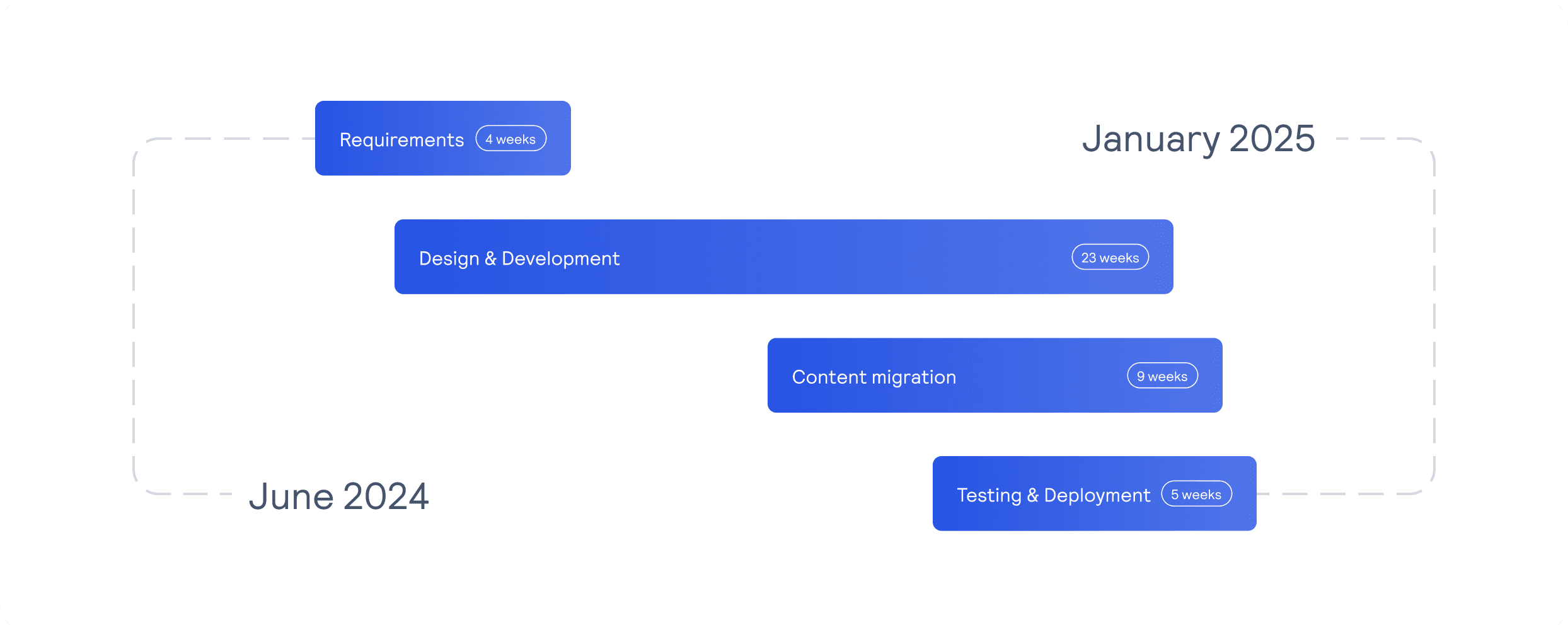
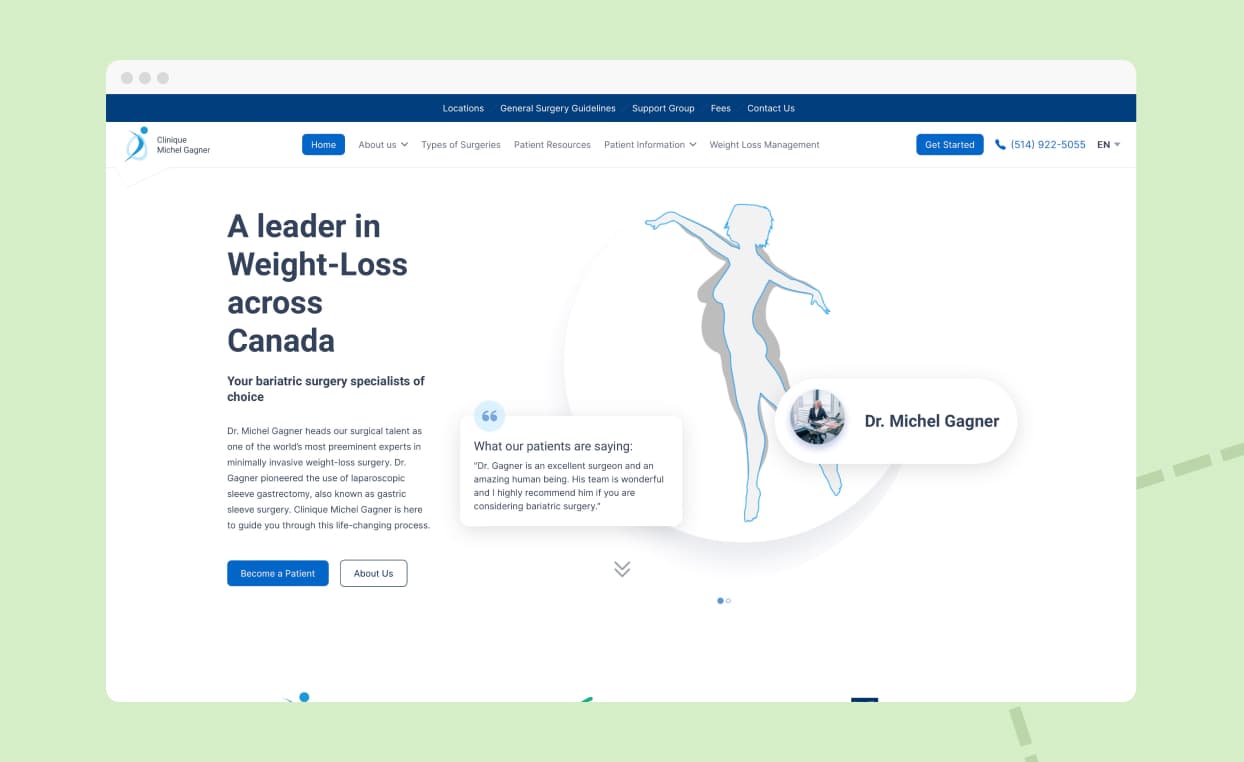
We transformed a bug-ridden website into an automated marketing platform, empowering the team to launch campaigns in hours instead of weeks and reallocate significant developer resources.

data.world (acquired by ServiceNow) had a marketing team that couldn't move without filing a dev ticket. Campaign launches took three weeks. The site was slow, unstable, and costing six figures in engineering time spent on work that should have been self-serve.
They didn't need a new website. They needed to stop being held hostage by the one they had.

Every campaign update required a dev ticket, and a three-week wait
Frequent bugs and slow load times were killing conversions before visitors even engaged
Senior engineers were spending billable hours publishing blog posts and updating landing pages

We rebuilt the website using Statamic's best practices with automated deployments and intuitive content management, empowering non-technical teams.

99% faster campaign launches
$120k in annual cost savings
160% faster site performance driving higher conversions
Full operational autonomy for the marketing team

Working with Lucky Media has been an absolute dream! Partnering closely with Lokman and his team, they’ve taken our website from ’broken’ to highly functional in just a matter of months.

Kaitlyn Crawford
Director of Product Marketing Management @ ServiceNow
Let’s chat
We partner with a limited number of brands each quarter to ensure senior-level attention on every project.


data.world's website wasn't just underperforming, it was actively blocking the business from moving:
- Slow time-to-market: Simple content changes, a new campaign page, an updated headline, a product announcement, required developer involvement. The average wait was three weeks. By the time a campaign went live, the window had often passed.
- Bad user experience: The site was losing visitors before they converted. Frequent bugs and slow load times were measurable revenue leaks. High bounce rates signaled that the site was working against the marketing team, not for them.
- High operational costs: Engineering hours were going to the wrong problems. Senior developers were spending time on content updates instead of product work. The marketing team's dependency on dev wasn't just inefficient, it was expensive, costing the business six figures annually in misallocated engineering resources.
- Poor SEO and digital visibility: Poor Core Web Vitals and weak technical SEO meant data.world was invisible in the searches that should have been driving pipeline. The site's performance wasn't just a UX problem, it was a lead generation problem.
We didn't patch the existing system. We replaced the constraints at their root. Our approach focused on three things: eliminating the deployment bottleneck, giving the marketing team full operational control, and making the site fast enough to compete.

Campaign launches that took three weeks now take under an hour. The marketing team pushes updates directly, no ticket, no waiting, no negotiating with the dev queue. When a competitor moves, data.world can respond the same day.
Why this matters: If your team is still waiting on developers to publish a page, you're not losing time, you're losing revenue. The deployment bottleneck isn't a workflow problem. It's a structural one. We solve it at the infrastructure level so it doesn't come back.
Technical deep dive: We re-architected the deployment pipeline to eliminate manual intervention entirely. Large assets, images, PDFs, media, were separated into a dedicated server, removing them from the build process and dramatically reducing compile times. The result was a single-click deployment workflow that brought build time from three days down to under an hour, with zero downtime during pushes.

The marketing team can now build, edit, and publish pages without touching a line of code or filing a single ticket. New campaign page? Live in minutes. A/B test on the hero section? Done before lunch. The system has guardrails built in, brand stays consistent, no matter who's publishing.
Why this matters for you: Marketing autonomy isn't about giving your team more tools. It's about removing the structural dependency on engineering for work that was never engineering's job. When your team controls the site, your campaign velocity is limited only by your ideas, not your ticket queue.
Technical deep dive: We implemented modular building blocks, architecture inside Statamic's Control Panel. Each page is assembled from a library of pre-built, brand-governed blocks — hero sections, feature grids, CTAs, blog layouts — that non-technical editors can arrange freely without breaking the design system.

The site is now 160% faster. That's not a technical vanity metric, it directly affects how many visitors stay, how many convert, and where Google ranks you. Organic traffic that was being blocked by poor Core Web Vitals scores is now reaching the pipeline.
Why this matters for you: Every second of load time you cut increases the probability that a visitor becomes a lead. For a site generating enterprise pipeline, a 160% performance improvement isn't a nice-to-have. It's a revenue decision.
Technical deep dive: We upgraded data.world's Statamic installation to the latest version, unlocking performance improvements and security patches that had been inaccessible on the legacy build. We implemented full-page caching, lazy-loaded assets, and image optimization pipelines to reduce Time to First Byte and Largest Contentful Paint.

Hundreds of blog posts, landing pages, and years of indexed content, migrated without losing a single ranking. The SEO equity data.world had built over years didn't get wiped in the transition. It carried over, intact, into the new platform.
Why this matters for you: A platform migration is the moment most agencies quietly lose your organic rankings. URL structures change, redirects get missed, canonical tags get dropped. We treat SEO preservation as a hard requirement of the migration, not a post-launch cleanup task. You don't rebuild what you already earned.
Technical deep dive: The migration included older blog posts inherited from WordPress. We scripted a full content export from the existing Statamic instance, mapping field structures to the new blueprint architecture before a single piece of content was moved.
Let’s chat
We partner with a limited number of brands each quarter to ensure senior-level attention on every project.


99% faster campaign launches - Three-week ticket cycles replaced by a single click. When data.world's marketing team has an idea on Monday, it's live before Friday. That's not a workflow improvement — that's a competitive posture.
$120k returned to the engineering budget - Senior developers stopped spending their hours on content updates. That six-figure reallocation went toward product work — the initiatives that were sitting in the backlog while the website demanded attention.
160% faster site - Not a benchmark improvement. A revenue improvement. Faster pages mean lower bounce rates, higher conversion probability, and stronger organic rankings. Every one of those outcomes feeds pipeline.
Complete Operational Autonomy - The marketing team runs it themselves. No tickets. No dev dependency. No waiting. They own the site the way a marketing team should always have owned it.
99%
Faster Campaign Launches
$120k
Annual Cost Reduction
160%
Performance Boost
99%
Uptime
The success came from addressing both technical debt and operational workflow. By replacing a fragile system with an automated, intuitive platform, we eliminated the bottlenecks that were constraining growth. The solution creates a strategic advantage through unprecedented speed and efficiency.

Let’s chat
We partner with a limited number of brands each quarter to ensure senior-level attention on every project.


Statamic website redesign and development
Health coaching company reduces hosting costs 80% with modern website platformHealthcare Statamic website development
Surgery clinic increases lead generation by 26%