AI application using Laravel and OpenAI
Tech startup saves 960 hours with AI-powered automation
In mid-2023, before AI automation became a standard agency offering, we built a fully automated lead management pipeline for a US sales tech startup. The result: 960 hours of manual work eliminated, a 20% revenue increase, and a sales team that finally spends its time selling.
Background
Our client was a fast-growing sales and marketing technology startup in the US, building AI-driven customer acquisition tools for B2B companies. Their product was scaling. Their operations weren't.
By mid-2023, their sales team was manually processing every inbound lead: filtering, validating, writing outreach emails, managing follow-up threads, and coordinating meeting bookings by hand. At low volume, it was manageable. At growth volume, it was a ceiling.
This was mid-2023. Production-ready AI automation wasn't a service you could buy off the shelf. Most agencies weren't building with OpenAI in client production environments yet. We were.

Challenge
Manual lead processing consuming 4+ hours every single day
Lead volume growth outpacing the team's capacity to respond
Inconsistent follow-up timing directly hurting conversion rates
Senior sales reps doing data entry instead of closing deals

Solution
A custom AI automation platform built on Laravel and OpenAI, integrated directly into their existing Active Campaign and Calendly infrastructure, no rip-and-replace, no new tools forced on the team.

Results
960 hours of manual labor eliminated annually
20% increase in sales revenue
35% improvement in operational efficiency
100% of leads processed automatically, with human-quality engagement
Let’s chat
We partner with a limited number of brands each quarter to ensure senior-level attention on every project.
Challenges
By the time this client came to us, the bottleneck wasn't a people problem. It was a systems problem that was costing people their best working hours.
Revenue limitations: Every hour a sales rep spent filtering leads and writing first-touch emails was an hour not spent in a conversation with a qualified prospect. The manual process wasn't just slow, it had a direct and measurable cost to pipeline.
Scalability barriers: Their inbound volume was growing, which should have been good news. Instead, it exposed how fragile the manual process was. Response times degraded as volume increased. Leads that came in on Friday afternoon didn't hear back until Monday. In competitive B2B sales cycles, that delay is often fatal to the opportunity.
Conversion inconsistencies: Manual outreach meant email quality and timing varied by who was working that day, how busy they were, and how much energy they had for the twelfth lead of the afternoon. The best leads and the worst leads were getting the same inconsistent treatment.
Resource misallocation: The team they had built was capable of complex, high-value sales work. They were spending 4+ hours a day on tasks that required no sales judgment whatsoever. That's not a productivity problem, it's an architecture problem.
Our solution
We built a four-stage AI automation pipeline that handled everything from lead intake to meeting booking, without changing the tools the sales team already lived in. Active Campaign stayed. Calendly stayed. What changed was everything between an inbound lead and a booked meeting.
Building this in mid-2023 meant working with OpenAI's API in a production environment before most development teams had attempted it for client work. There was no established playbook. We wrote ours.
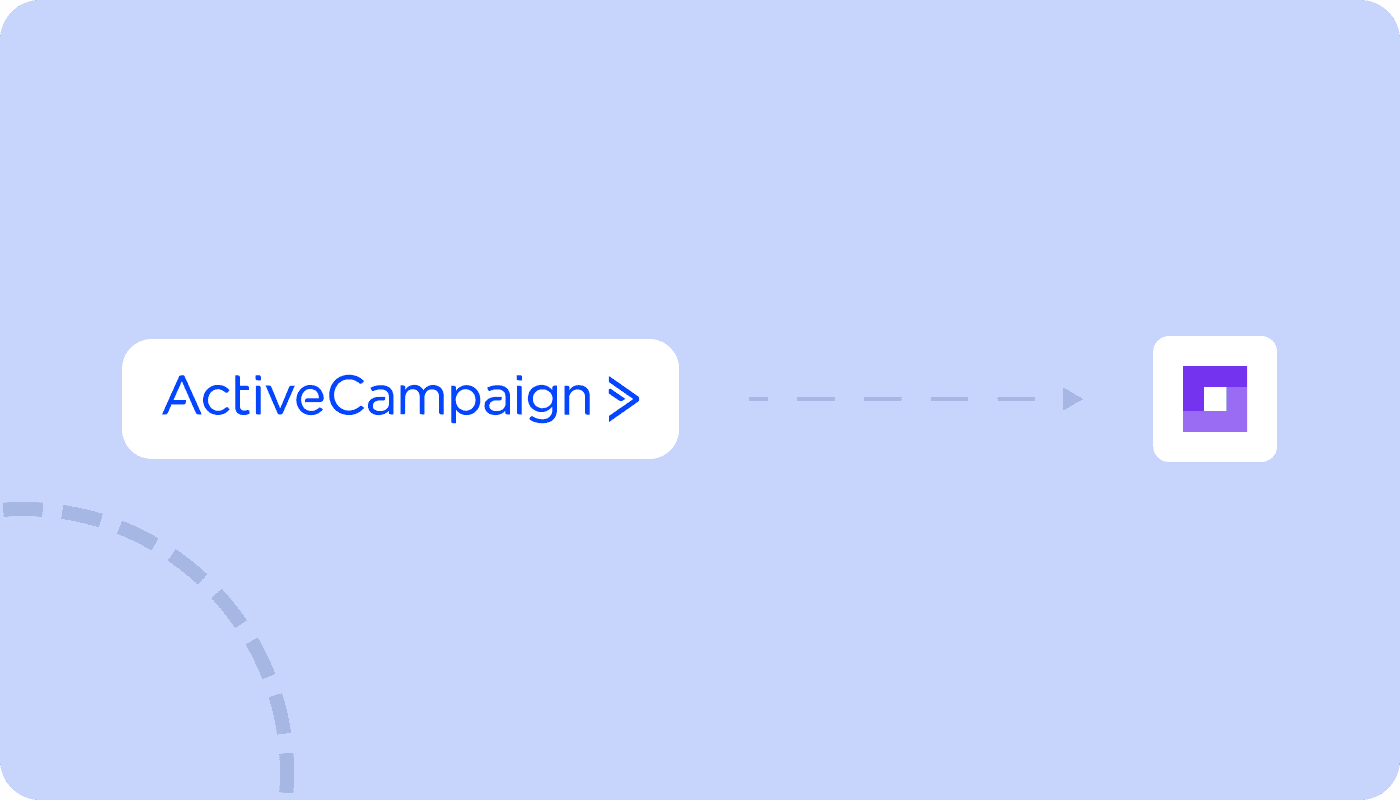
Automated lead filtering
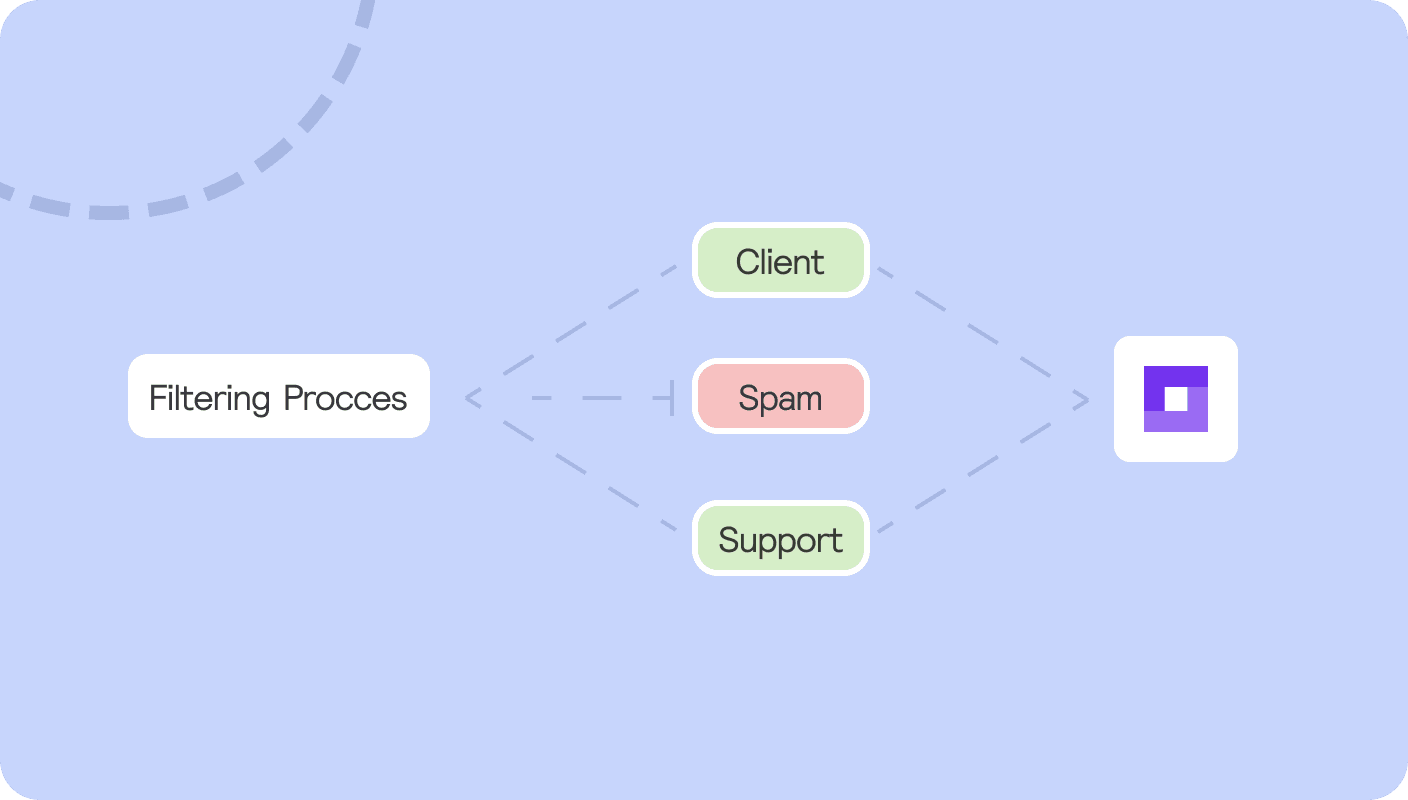
We built a lead intake system that connects directly to Active Campaign and scores every incoming lead against a configurable set of qualification criteria (company size, industry fit, engagement signals, and behavioral data) before any human sees it.
Why this matters: The sales team had been making the same binary judgment call hundreds of times a week: is this lead worth my time? That judgment can be codified. Once it's codified, it can be automated. The reps now start their day with a prioritized queue of leads that have already passed qualification, not a raw inbox.
Technical deep dive: We used Laravel and Inertia.js for this project. The filtering logic runs as a Laravel background job triggered by Active Campaign webhooks on lead creation. We deliberately kept the scoring criteria in a configuration layer rather than hardcoded into the application logic, so when the client's ICP definition evolves, which it will, the criteria update without a deployment. The first version of those criteria was built collaboratively with the sales team based on six months of their historical conversion data. That domain knowledge is what made the filtering useful rather than just functional.
AI-driven email outreach
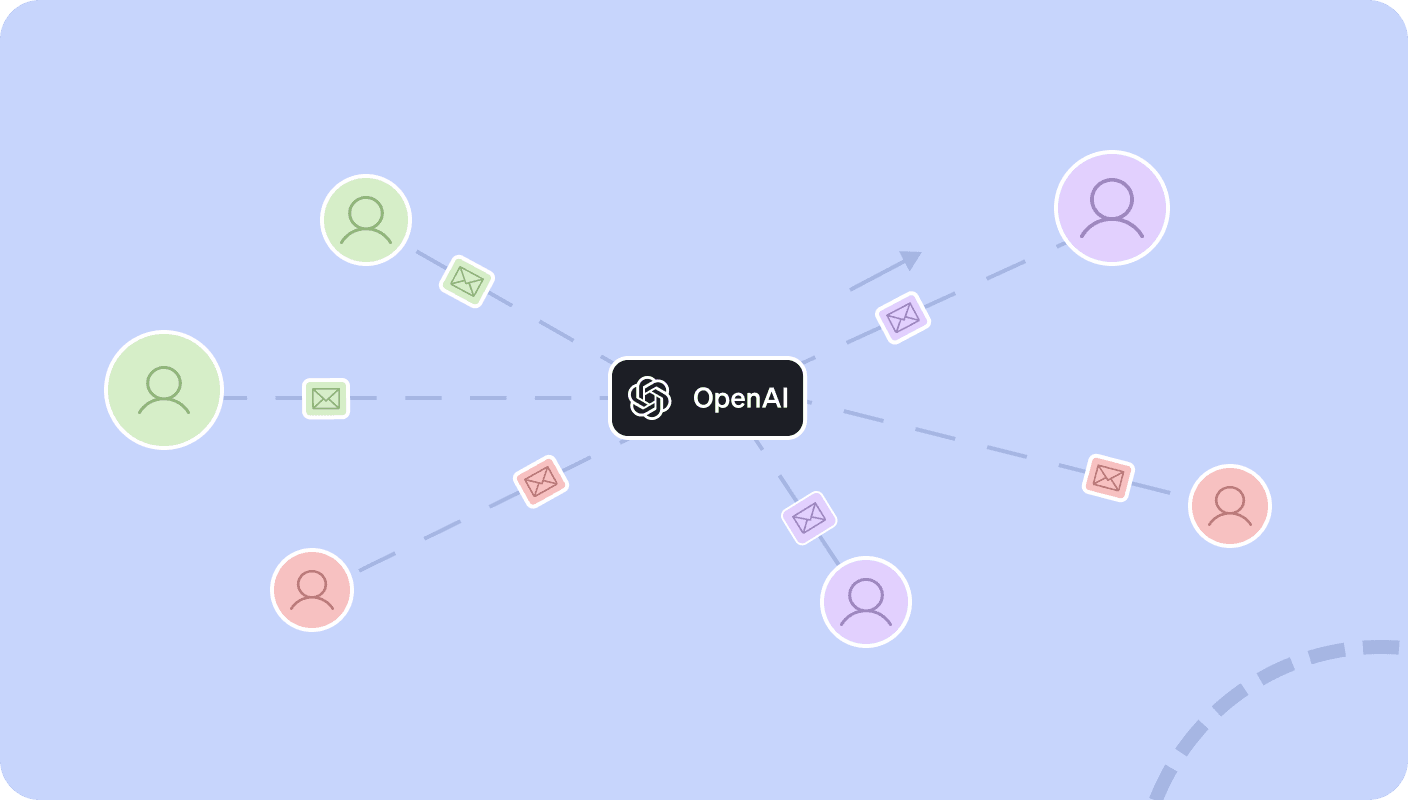
Once a lead clears the filtering stage, the platform generates a personalized first-touch email using OpenAI, not a template with a name swapped in, but a contextually constructed message that references the lead's industry, company context, and the specific problem their profile suggests they're facing.
Why this matters: Personalization at scale sounds like a contradiction. Before this system, the client's choices were: fast and generic, or slow and personal. Generic emails have low reply rates. Personal emails take time no one had. This resolved that tradeoff entirely.
Technical deep dive: We used OpenAI to create dynamic, context-aware emails that adapt to each lead’s specific information, ensuring relevant and engaging content. We spent a significant portion of the build on prompt engineering rather than application architecture, because that's where the quality risk lived.
Conversational AI system
After the first email goes out, the platform monitors replies and manages the follow-up conversation autonomously. The AI maintains context across the full thread, responds to questions, handles objections within defined boundaries, and moves the conversation toward a meeting booking, all without human involvement unless the lead specifically triggers an escalation condition.
Why this matters: The window between a lead replying and a human responding is where deals go cold. A reply at 9pm on a Tuesday used to wait until morning. Now it gets a contextually relevant response within minutes, regardless of when it arrives.
Technical deep dive: The AI is designed to handle multi-step conversations. The hardest architectural problem here wasn't generating good responses, it was knowing when not to respond automatically. We built an escalation classifier that runs on every inbound reply before the response is generated.

Automated scheduling integration
When a lead indicates they're ready to book, the platform handles the scheduling handoff via Calendly integration, detecting booking intent in the conversation, surfacing availability, and confirming the meeting without the rep ever entering the thread.
Why this matters: Scheduling coordination is the last manual bottleneck in a sales sequence that should be entirely frictionless by this stage. Removing it closes the loop on the full automation pipeline.
Technical note: The Calendly integration was deliberately kept simple. We used their existing infrastructure rather than building a custom scheduling layer. The complexity was in the intent detection that triggers the handoff, not the handoff itself.
Let’s chat
We partner with a limited number of brands each quarter to ensure senior-level attention on every project.

The results
The platform went live in mid-2023 and delivered measurable impact within the first full quarter of operation.
960 hours of manual work eliminated annually. The 4+ daily hours the team had been spending on lead processing dropped to near zero. That time was reallocated directly to pipeline activities, calls, demos, and relationship work that required human judgment. At an average fully-loaded cost for a sales professional, that represents a six-figure annual return on the build investment.
20% increase in sales revenue. Faster lead response times, more consistent outreach quality, and sales reps focused on high-value work rather than administrative tasks compounded into a measurable revenue increase within the first operating quarter. The improvement exceeded the client's internal projection for the year.
35% improvement in operational efficiency. The team was handling a higher lead volume than before implementation, with the same headcount. The platform absorbed the volume growth that would otherwise have required two additional hires.
100% automated lead processing. Every inbound lead now moves through the full pipeline (filtering, outreach, conversation management, and scheduling) without manual intervention unless the escalation classifier routes it to a rep. Human involvement is now reserved for conversations that actually benefit from human judgment.
960
Hours Annual Time Savings
20%
Revenue Growth
35%
Operational Efficiency
99%
Uptime
Why it worked
Three decisions made the difference between a system that worked in staging and a system that worked in production.
We kept the sales team's existing tools. Active Campaign and Calendly weren't replaced, they were extended. The reps didn't have to learn a new workflow. The AI layer sat behind the interfaces they already used. Adoption friction was close to zero.
We built the escalation layer before the automation layer. The sales team's willingness to trust the system depended on knowing it would fail gracefully. Before we optimized for automation coverage, we made sure that anything the AI wasn't confident handling would reach a human immediately, with full context. That decision made the handoff feel like a feature, not a failure mode.
We designed for the client's ICP, not for a generic lead. The filtering criteria, the prompt context, and the conversation boundaries were all built around six months of the client's historical data. A generic AI outreach tool wouldn't have produced these results. The specificity is what made the output credible enough to send under a sales rep's name.
Let’s chat
We partner with a limited number of brands each quarter to ensure senior-level attention on every project.

More projects like this
Healthcare ERP system using Laravel
Medical clinic increases efficiency 340% with unified healthcare platform